News
ANTENNA holds its 3rd Annual General Meeting on Lesbos Island, Greece
From 19 to 23 October, 2026, the ANTENNA consortium gathered in Lesbos for its third Annual General Meeting (AGM). Bringing partners together in a hybrid format, the meeting was an opportunity to look back at progress, exchange ideas and shape the next steps of the project. Over several days of discussions, technical updates and collaborative sessions, partners reviewed ongoing tasks, brainstormed ideas for future publications and coordinated upcoming activities across the consortium.
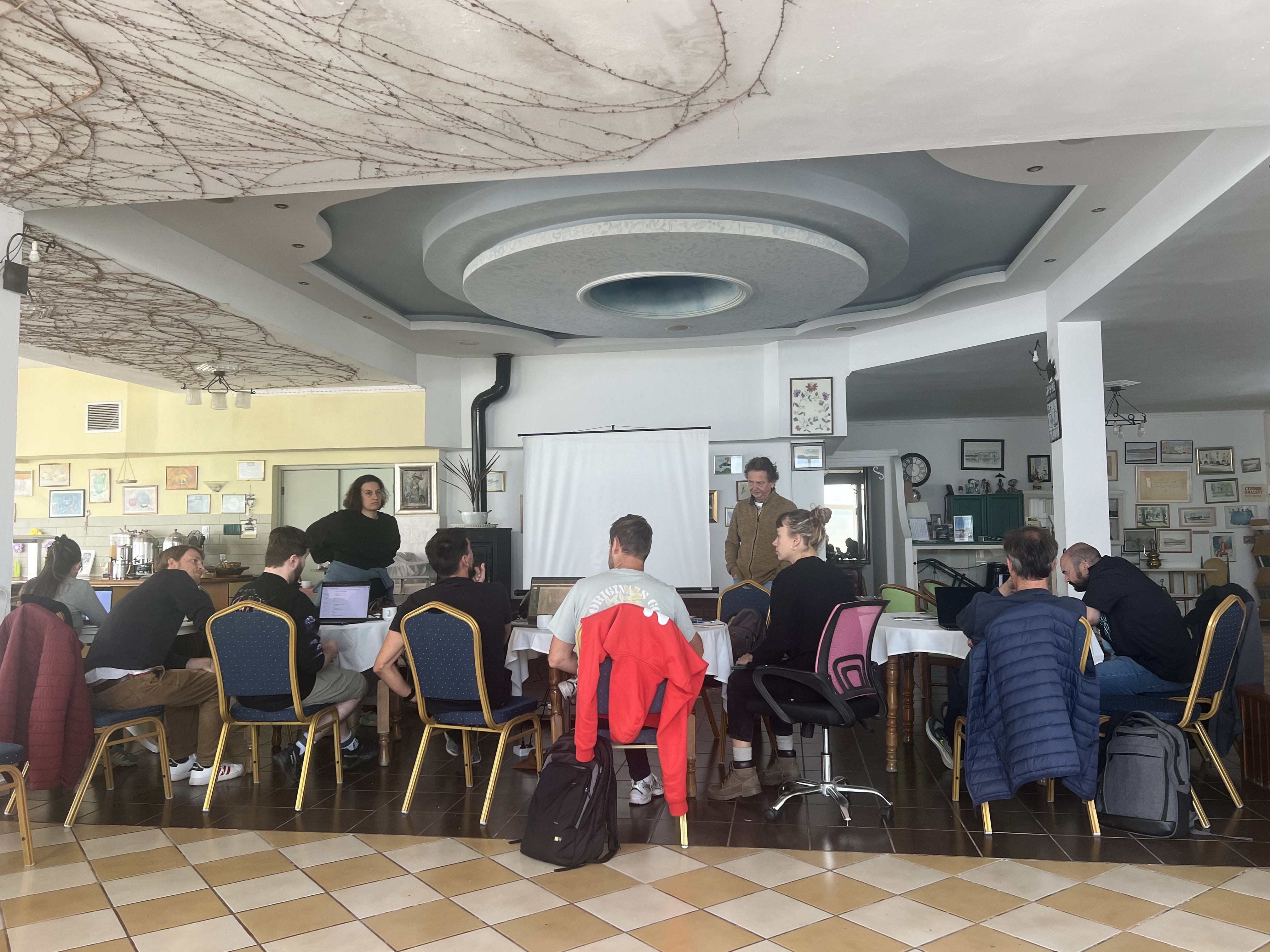
The consortium gathers on the first day of the 3rd annual meeting.
The first day was devoted to updates on Work Packages 2, 3 and 4 with a central question running through the discussions: how can novel technologies help us better understand and monitor biodiversity?The meeting began with WP2 ‘Added value of novel technologies’ where partners presented field-test results and explored how new automated tools perform compared with traditional methods and where they add the most value. The Curaçao field-test results came first, followed by Diopsis camera data from different field locations and an open discussion of what went right and what didn't. The Greek team then showed how to detect flowers, dead wood, and bare soil with drones, the food and nesting resources bees need. They also covered predicting bee diversity from drone images, spotting Asphodelus ramosus, and real-time UAV-to-web-app recording.
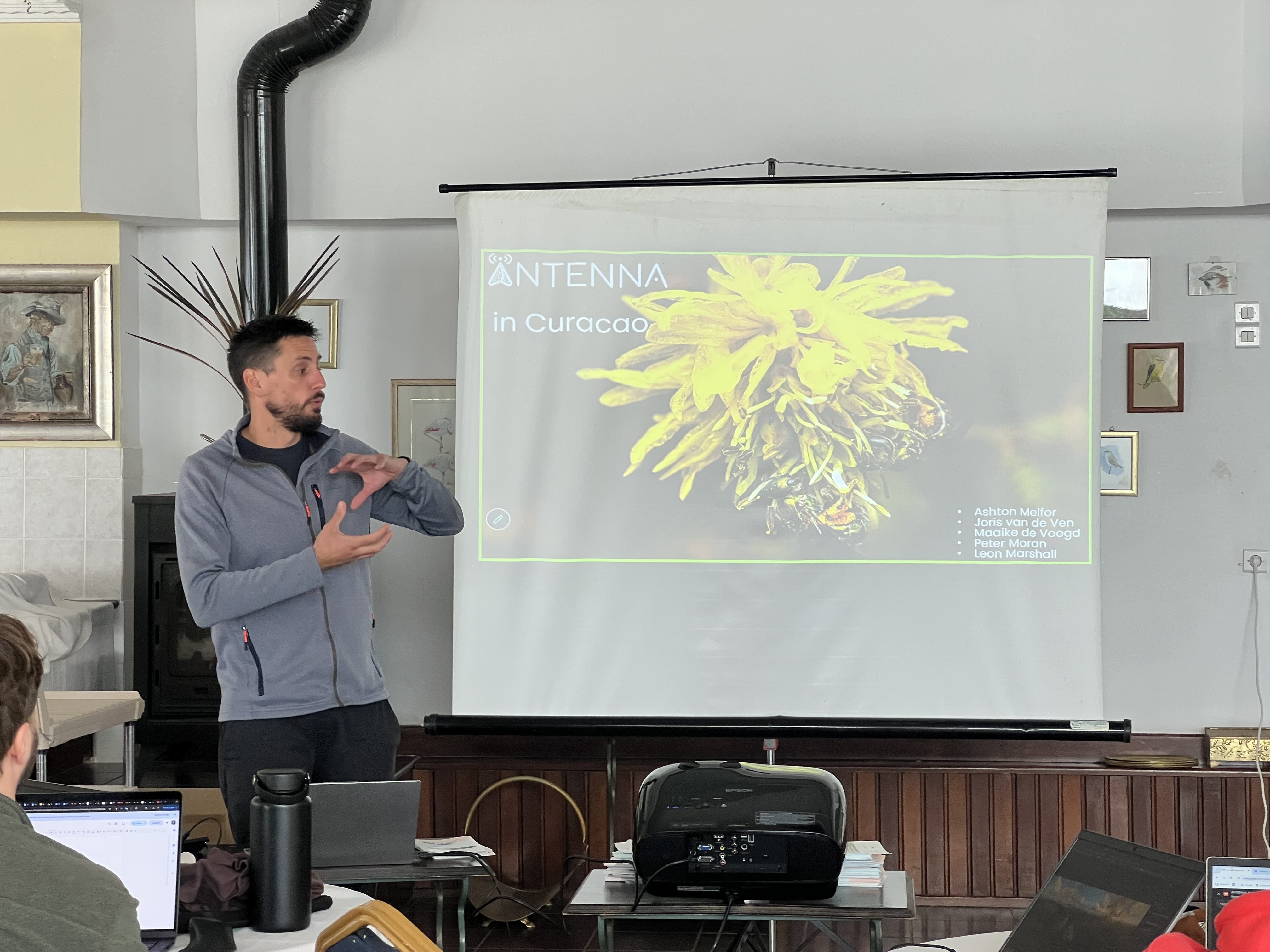
Dr. Leon Marshall presents on the field tests in Curacao.
From field observations to broader biodiversity patterns, the discussions continued with Work Package 3 ‘Integrative monitoring and modelling’. Sessions focused on robust metrics, assessing monitoring programmes, the ANTENNA biodiversity forecasting challenge and forecasting butterflies. The day finished with data standards and pipelines from Work Package 4 ‘Large-scale implementation of novel monitoring approaches’, including DNA barcoding as an early warning system.
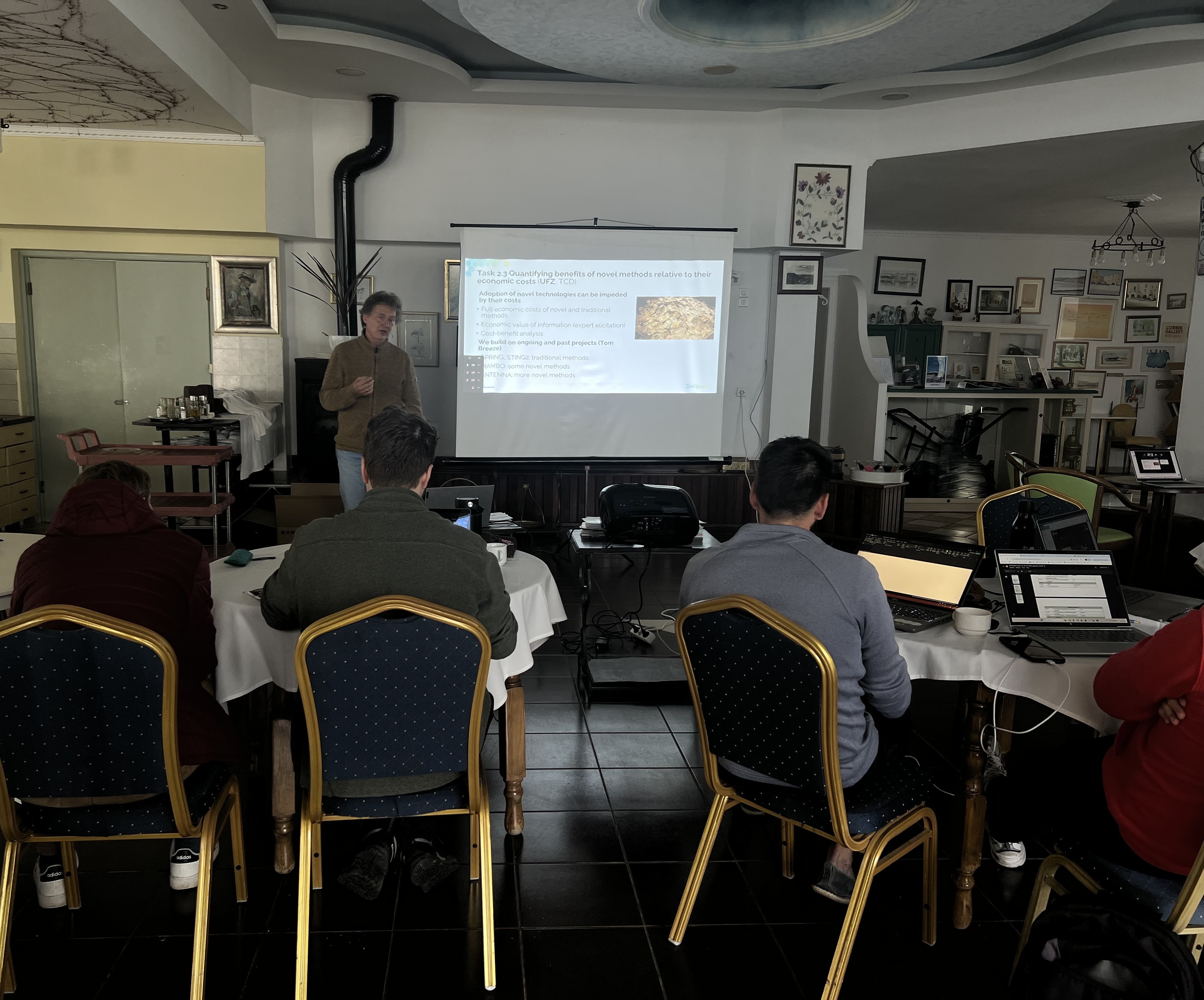
ANTENNA coordinator Oliver Schweiger on T2.3 + T2.4 Cost-benefit and stakeholder feedback
The second day shifted the focus towards technology development, project coordination and the wider impact of ANTENNA's work. It began with Work Package 1 ‘Co-design and technology readiness level advancement’ with a closer look at progress on EntoScan and MiniMon. A special panel was dedicated to midterm review feedback and discussion of Work Package 5 ‘Project coordination and communication’, including how ANTENNA’s results can reach the right audiences through the project’s communication, dissemination and exploitation activities, ensuring that the findings are shared with those who can benefit from them.
The afternoon marked the end of the AGM and the start of a three-day writing retreat, where partners began exchanging ideas for upcoming project publications.
A highlight of the AGM was a visit to the University of the Aegean in Mytilene. Partners saw where the local ANTENNA team works and got to see the species the project works with. They also toured several labs, including the Drone Lab, where they saw the drones used by the scientists, and the Natural Disasters Lab, where they learned how the team works with augmented reality.
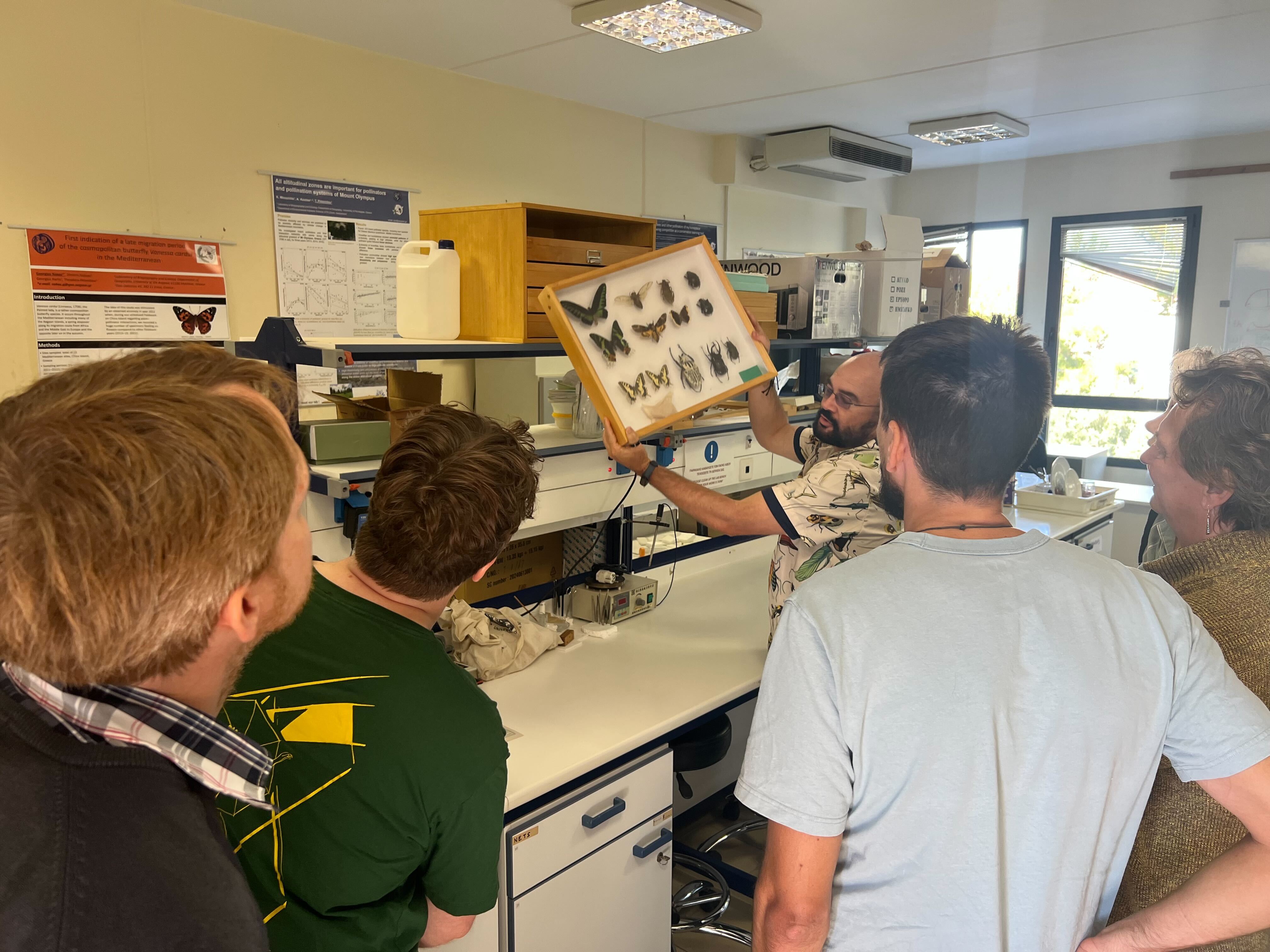
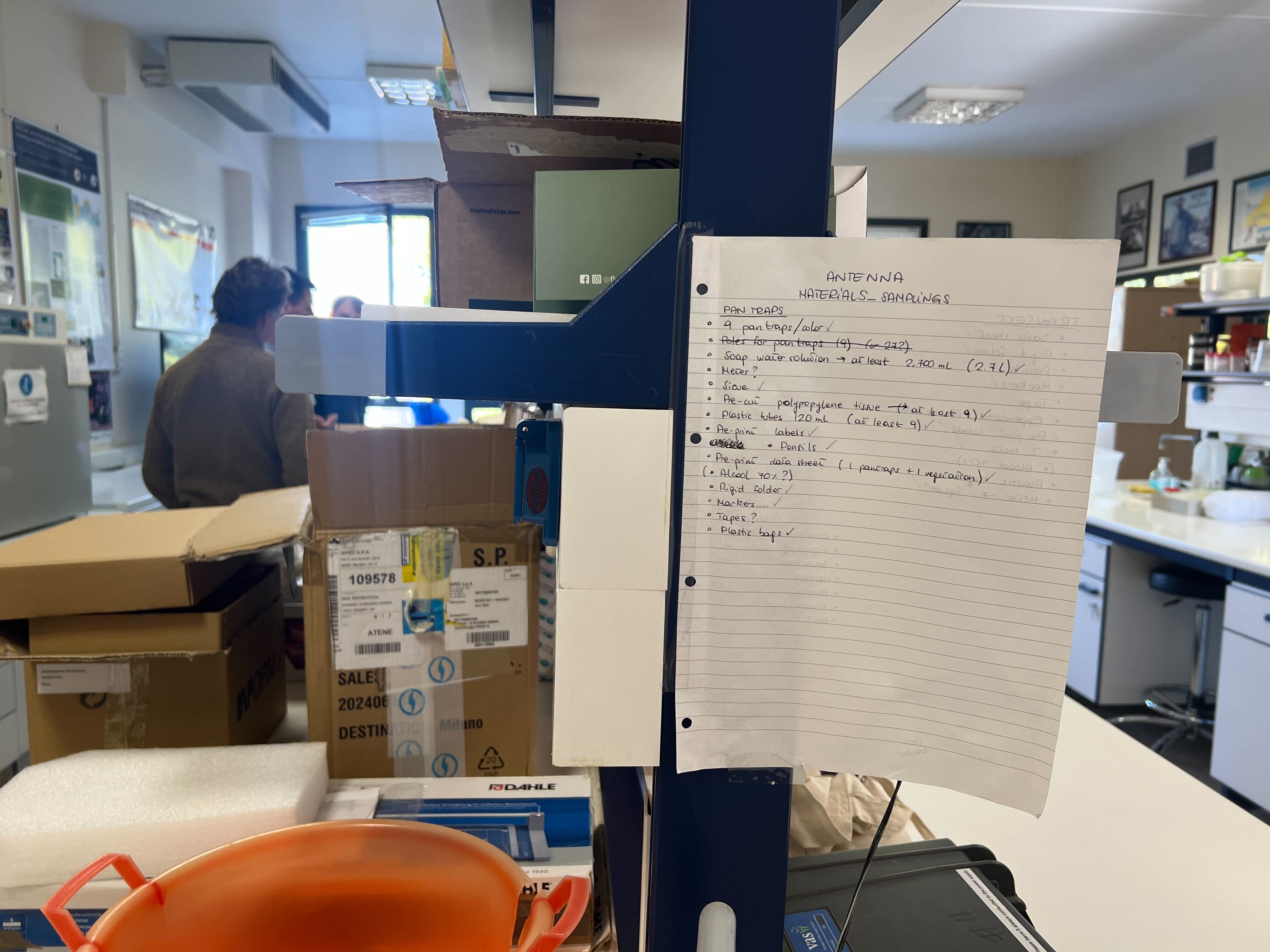
The consortium warmly thanks the University of the Aegean and the local team for their generous hospitality. The meeting wrapped up with new ideas and plans for the upcoming and final year of the ANTENNA project.